
What is Hygiene?
Understanding the Foundation of Health, Safety, and Infection Prevention
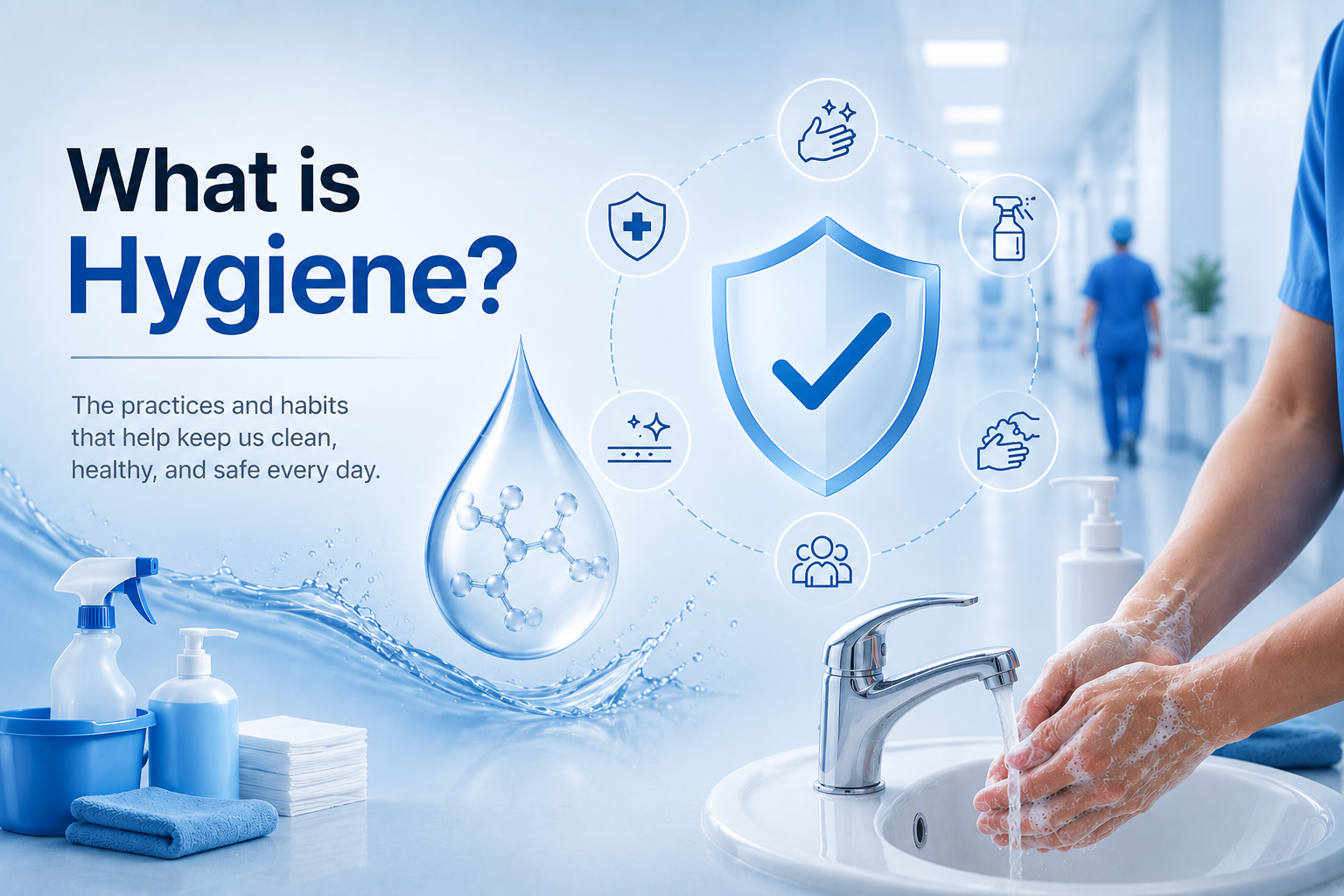
What is Hygiene?
Ask someone what hygiene means, and you'll probably hear one of these answers:
"It's about being clean."
"It's washing your hands."
"It's keeping things tidy."
While none of these answers are wrong, they're incomplete.
After spending years working with hospitals, food manufacturers, commercial facilities, and infection prevention professionals, one thing becomes clear:
Hygiene is not about making things look clean. It's about reducing the risk of disease transmission.
This distinction is surprisingly important.
A floor can look spotless and still harbour harmful microorganisms.
A shiny countertop may appear hygienic but remain contaminated if it hasn't been cleaned and disinfected correctly.
Conversely, some healthcare environments may not appear visually immaculate immediately after use, yet they remain hygienically safe because effective infection prevention procedures are consistently followed.
This is why professionals rarely judge hygiene by appearance alone.
They judge it by whether harmful microorganisms are being effectively controlled.
Understanding this difference is the first step towards understanding what hygiene really means.
What Does Hygiene Mean?
Hygiene refers to the practices, systems, and behaviours used to maintain health and reduce the spread of harmful microorganisms.
Rather than focusing solely on cleanliness, hygiene aims to interrupt the pathways through which bacteria, viruses, fungi, and other pathogens spread between people, surfaces, equipment, food, animals, and the environment.
In practical terms, hygiene includes activities such as:
-
Washing hands correctly
-
Cleaning environmental surfaces
-
Disinfecting high-touch areas
-
Managing waste safely
-
Handling food hygienically
-
Maintaining clean water systems
-
Preventing cross-contamination
-
Following infection prevention procedures
These practices work together to reduce the likelihood of illness and support healthier environments.
Hygiene Is More Than Cleaning
One of the biggest misunderstandings I encounter is the belief that cleaning and hygiene are the same thing.
They're closely related—but they're not identical.
Cleaning removes visible dirt, dust, grease, and organic matter from surfaces.
Hygiene goes further.
Its purpose is to reduce health risks by controlling microorganisms and preventing contamination.
For example:
Imagine a hospital bedside table.
If it's wiped with water alone, it may look perfectly clean.
But if disease-causing microorganisms remain on the surface, the hygiene objective hasn't been achieved.
Similarly, a commercial kitchen may have sparkling stainless-steel benches, but if raw poultry juices have contaminated preparation areas, the environment may still present a food safety risk.
Appearance is important.
Health protection is essential.
Why Hygiene Matters
Good hygiene is one of the simplest and most effective ways to protect public health.
It helps reduce the spread of infectious diseases, supports safer workplaces, protects vulnerable individuals, and contributes to healthier communities.
Its importance extends far beyond hospitals.
Effective hygiene plays a critical role in:
-
Healthcare facilities
-
Food manufacturing
-
Restaurants and catering
-
Schools and childcare centres
-
Hotels and hospitality
-
Agriculture and animal care
-
Commercial offices
-
Public transport
-
Homes
Every environment where people interact has opportunities for microorganisms to spread.
Hygiene helps interrupt that chain of transmission.
Understanding the Chain of Infection
One concept every infection prevention professional learns early is the chain of infection.
For disease to spread, several conditions generally need to occur:
-
A source of microorganisms.
-
A way for the microorganisms to leave that source.
-
A route by which they travel.
-
A way to enter another person.
-
A susceptible individual.
Hygiene practices aim to break this chain.
Hand hygiene reduces transmission between people.
Surface disinfection removes microorganisms from frequently touched areas.
Waste management prevents contamination.
Personal protective equipment reduces exposure.
Each practice interrupts one or more links in the chain, reducing the likelihood of infection.
This is why hygiene should be viewed as a complete system rather than a collection of isolated tasks.
Hygiene Is Built on Three Foundations
From an operational perspective, effective hygiene depends on three interconnected activities.
1. Cleaning
Cleaning removes dirt, grease, blood, food residues, and other contaminants.
Organic matter can reduce the effectiveness of disinfectants, making proper cleaning an essential first step in many situations. Without adequate cleaning, even the best disinfectant may not perform as intended.
2. Disinfection
Disinfection reduces or inactivates harmful microorganisms on surfaces after appropriate cleaning.
Different disinfectants work in different ways and are selected according to the environment, target microorganisms, material compatibility, and operational requirements.
Not every surface requires disinfection.
Understanding when disinfection is necessary is an important part of an effective hygiene programme.
3. Prevention
The most successful organisations don't simply clean after contamination occurs.
They design systems to reduce contamination in the first place.
Examples include:
-
Colour-coded cleaning equipment
-
Hand hygiene stations
-
Staff training
-
Scheduled cleaning programmes
-
Controlled product preparation
-
Standard operating procedures
-
Regular audits
Prevention is often the most overlooked aspect of hygiene, yet it usually delivers the greatest long-term impact.
Common Hygiene Mistakes
Over the years, I've noticed that hygiene failures rarely result from a lack of effort.
More often, they stem from misunderstandings or inconsistent practices.
Some of the most common mistakes include:
Assuming Clean Means Safe
A surface that looks clean may still contain microorganisms.
Visual inspection alone cannot confirm hygienic safety.
Skipping Hand Hygiene
Hands remain one of the most common routes of disease transmission.
Even in organisations with excellent cleaning programmes, poor hand hygiene can undermine infection prevention efforts.
Using the Wrong Cleaning Product
Not every cleaner is a disinfectant.
Likewise, not every disinfectant is designed to remove dirt.
Using the appropriate product for the task is essential.
Incorrect Dilution
Preparing disinfectants at the wrong concentration is one of the most common operational issues.
Solutions that are too weak may not provide the intended level of microbial control.
Solutions that are unnecessarily strong can increase costs, affect material compatibility, and create avoidable chemical exposure.
Ignoring High-Touch Surfaces
Door handles, lift buttons, bed rails, light switches, keyboards, taps, and shared equipment are touched far more frequently than floors.
Yet they're often overlooked during routine cleaning.
Targeting these surfaces usually has a greater impact on infection prevention than repeatedly cleaning low-risk areas.
Hygiene Across Different Industries
Although the principles remain similar, hygiene priorities vary between sectors.
Healthcare
Protecting patients, preventing healthcare-associated infections, and reducing cross-transmission.
Food Industry
Preventing food contamination and supporting food safety systems such as HACCP.
Agriculture
Reducing disease transmission among livestock and protecting animal health.
Commercial Facilities
Creating safe workplaces while maintaining public confidence and operational continuity.
Homes
Reducing everyday illness transmission through good personal and environmental hygiene.
Each environment presents different risks, but the objective remains the same:
Reduce opportunities for harmful microorganisms to spread.
Hygiene Is About Systems, Not Individual Products
One mistake many organisations make is believing that buying a premium disinfectant automatically improves hygiene.
Products are only one part of the equation.
A strong hygiene programme also depends on:
-
Clear procedures
-
Staff competency
-
Correct product preparation
-
Appropriate equipment
-
Routine monitoring
-
Consistent execution
Even the most effective disinfectant cannot compensate for inconsistent cleaning practices or poor staff training.
Successful hygiene programmes are built on systems that people can follow consistently every day.
The Future of Hygiene
Hygiene is changing.
Rather than relying solely on routine cleaning schedules, many organisations are adopting more structured, evidence-based approaches.
Technology now supports:
-
Digital cleaning records
-
QR-code verification
-
ATP monitoring
-
Automated dispensing systems
-
Smart inventory management
-
Staff e-learning platforms
-
Standardised dosing systems
The objective is no longer simply to clean more often.
It's to clean more consistently, more effectively, and with greater confidence.
As healthcare, food safety, and public health expectations continue to evolve, hygiene will increasingly be recognised not as a maintenance task, but as a critical operational function.
Final Thoughts
Hygiene is far more than keeping environments looking clean.
It is a structured approach to protecting health by reducing the spread of harmful microorganisms.
Whether in hospitals, food factories, offices, schools, or homes, effective hygiene combines cleaning, disinfection, prevention, and consistent operational practices to create safer environments.
The most successful organisations understand that hygiene isn't achieved through individual products alone.
It's achieved through well-designed systems that people can perform correctly, consistently, and confidently every single day.
When hygiene is viewed through that lens, it becomes more than a routine task—it becomes one of the most important foundations of public health.
Frequently Asked Questions
What is the definition of hygiene?
Hygiene refers to the practices and systems used to maintain health and reduce the spread of harmful microorganisms. It includes personal hygiene, environmental hygiene, food hygiene, and infection prevention measures.
Is hygiene the same as cleaning?
No. Cleaning removes visible dirt and contaminants, while hygiene focuses on reducing health risks by controlling microorganisms. Cleaning is often the first step in achieving effective hygiene but does not always eliminate harmful pathogens.
Why is hygiene important?
Good hygiene helps reduce the spread of infectious diseases, protects vulnerable individuals, supports safer workplaces, improves food safety, and contributes to healthier communities.
What are the main types of hygiene?
The major categories include personal hygiene, hand hygiene, environmental hygiene, food hygiene, healthcare hygiene, occupational hygiene, and water hygiene. Each focuses on reducing health risks within specific environments.
Ready to standardise your disinfection protocol?
Talk to our team about implementing PRO SolvTab™ CARE across your operation.
Related articles
The Technical Guide to NaDCC Disinfectant Tablets: Chemistry, Dilution, and Operational Implementation
An objective, technical guide to NaDCC tablets: HOCl chemistry, bleach comparison, pathogen kill rates, ppm dilution charts, and safety protocols.
Why Controlled-Dose Disinfectant Tablets Improve Hygiene Consistency
How Standardised Disinfectant Preparation Reduces Human Error Across Healthcare and Food Operations
What is Disinfection?
A Practical Guide to Understanding Disinfection and Why It Matters in Real-World Hygiene